With the days getting shorter and evenings much colder, I wanted to try my hand at making some bread using beer instead of water. As an avid home brewer, I don’t have a shortage of beer on hand and decided my most recent brew, a Munich Dunkel, would be the perfect addition to this bread.

Schedule
Using the lazy sourdough method is actually quite simple. The real key to this method is that you can use your unfed starter straight from the fridge without the need to make a levain. There’s also no autolyse which saves about 30 minutes.
Schedule: Here’s a link to the lazy sourdough method.
The exact schedule I used is at the bottom of this post.
Ingredients:
This recipe makes two loaves. Simply divide all the ingredients by two if you only want one loaf.
Dough:
- 925g King Arthur bread flour
- 60g dark rye flour
- 15g spent grain flour
- 760g beer (Munich Dunkel) @ 92’F
- 200g unfed starter straight from fridge (100% hydration)
- 22g sea salt

Method:
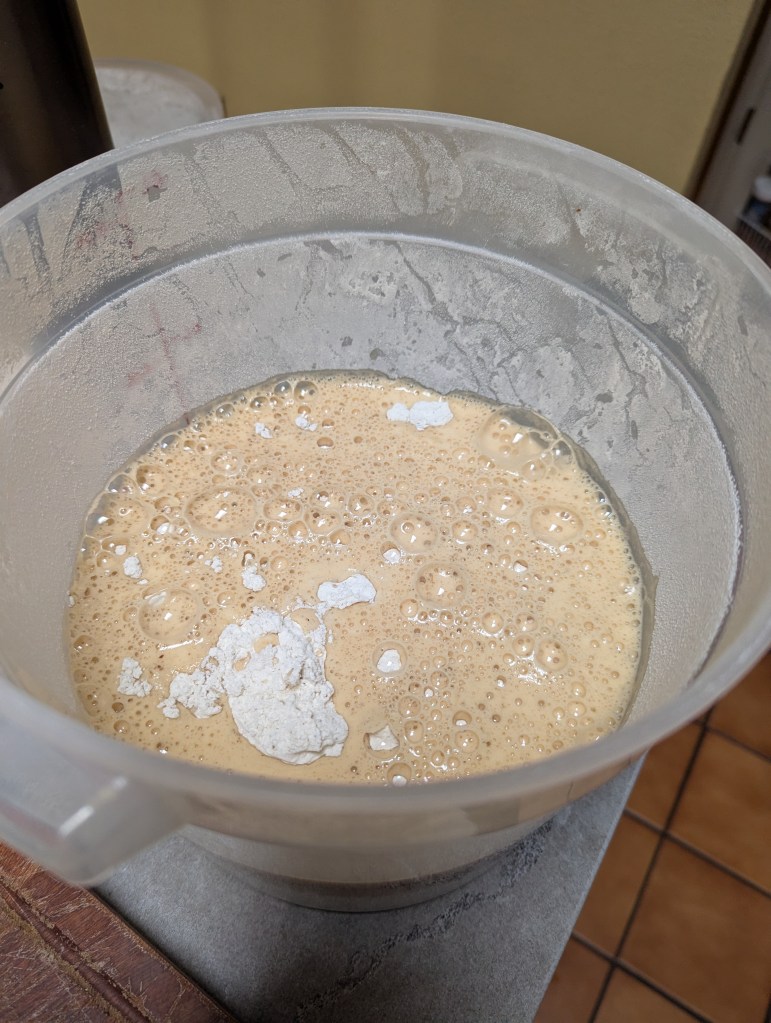
Most non-hoppy beers will work fine in this recipe but I’d recommend a dark and robust beer such as a dunkel, brown ale, stout or porter. It was easy for me to simply pour off 760g of beer from my kegerator, but you can always use a couple cans or bottles to get the desired amount of beer. If there’s an awkward amount and you don’t want to open an additional bottle or can, you can substitute some of the beer with water.
I was a little worried that warming up the beer in the microwave would be an issue due to the carbonation, but that didn’t seem to matter. I heated it up like I normally do my water and I didn’t have any problems with it causing extra foam.
After warming the beer, I weigh out my starter directly into the beer so I can mix it together first which makes it easier to incorporate into the flour. Speaking of flour, if you don’t have spent grain flour laying around, just use more rye, wheat or bread flour instead.
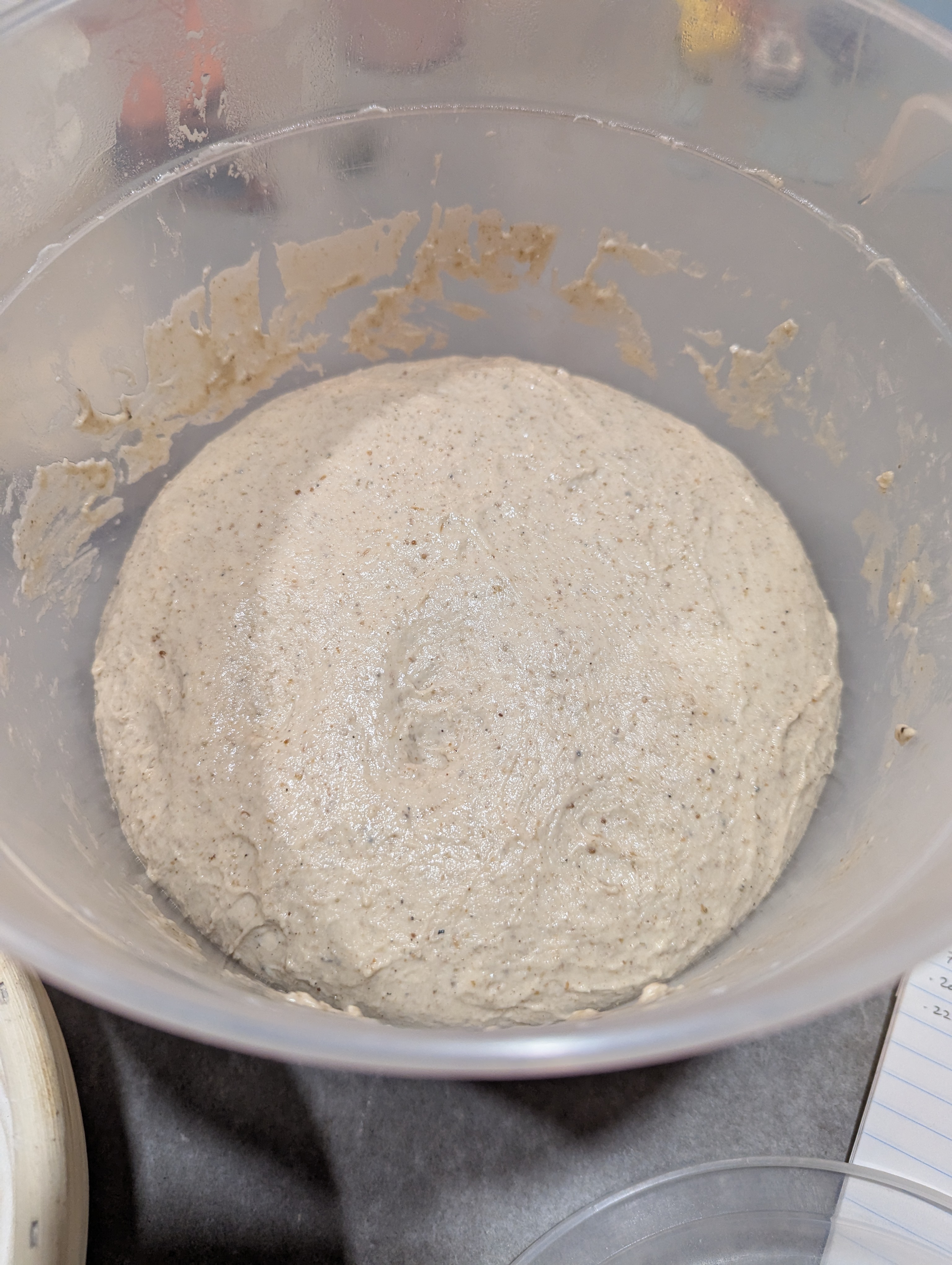
After mixing the dough, I performed 4 stretch and folds within the first 1.5 hours. I then let the dough bulk ferment at room temperature for a total of 8.5 hours since my kitchen was on the colder side on a cloudy November day. Just watch your fermentation and gauge whether you need a longer or shorter bulk time. The bread smells great while it’s fermenting too, with the darker beer lending some nice subtle chocolate and coffee aromas.
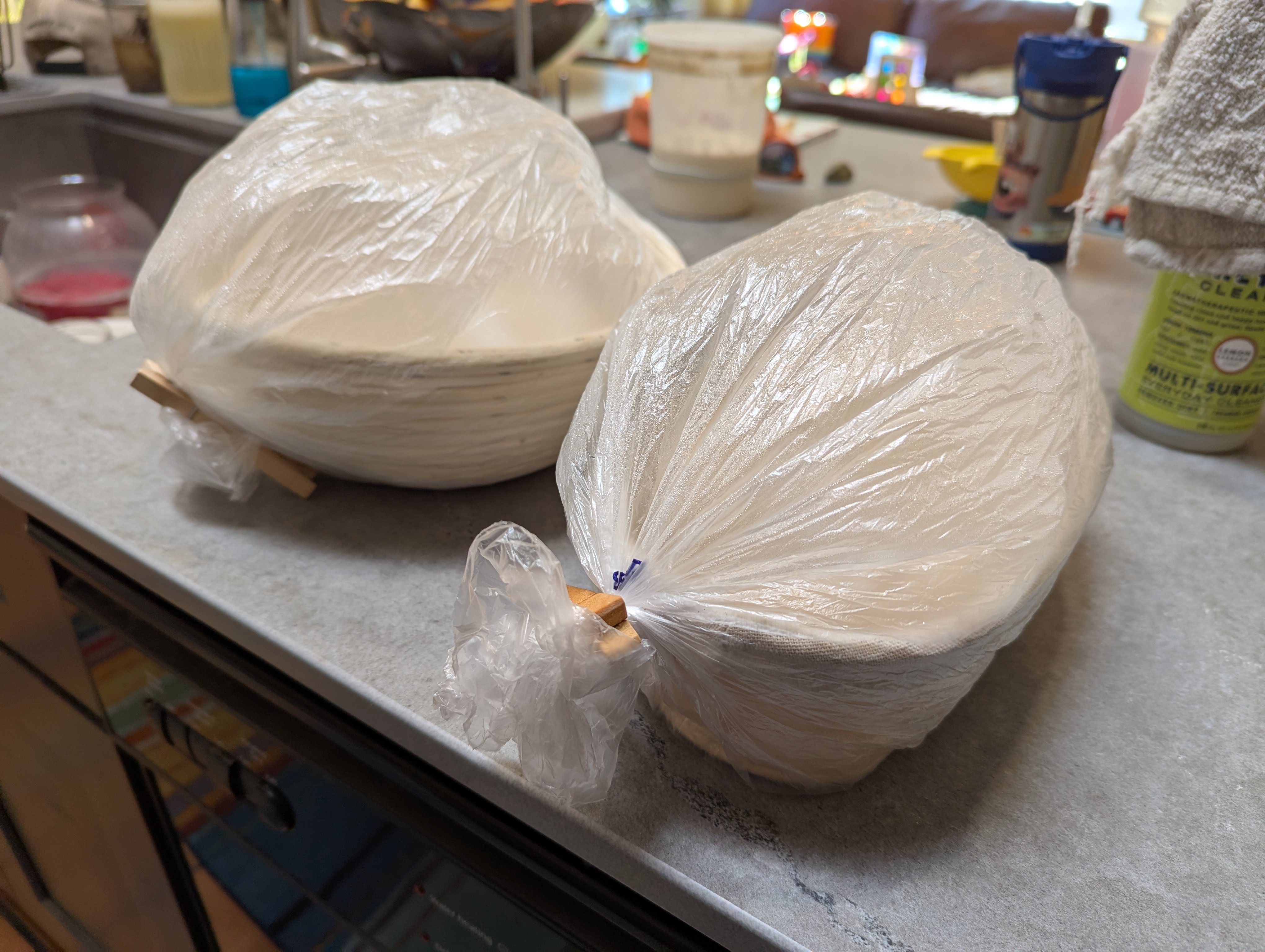
Once the dough had doubled, I divided and shaped the loaves and put them in bannetons that I liberally dusted with rice flour. I put the bannetons in vegetable bags and then placed them in the fridge for a 15 hour cold proof.


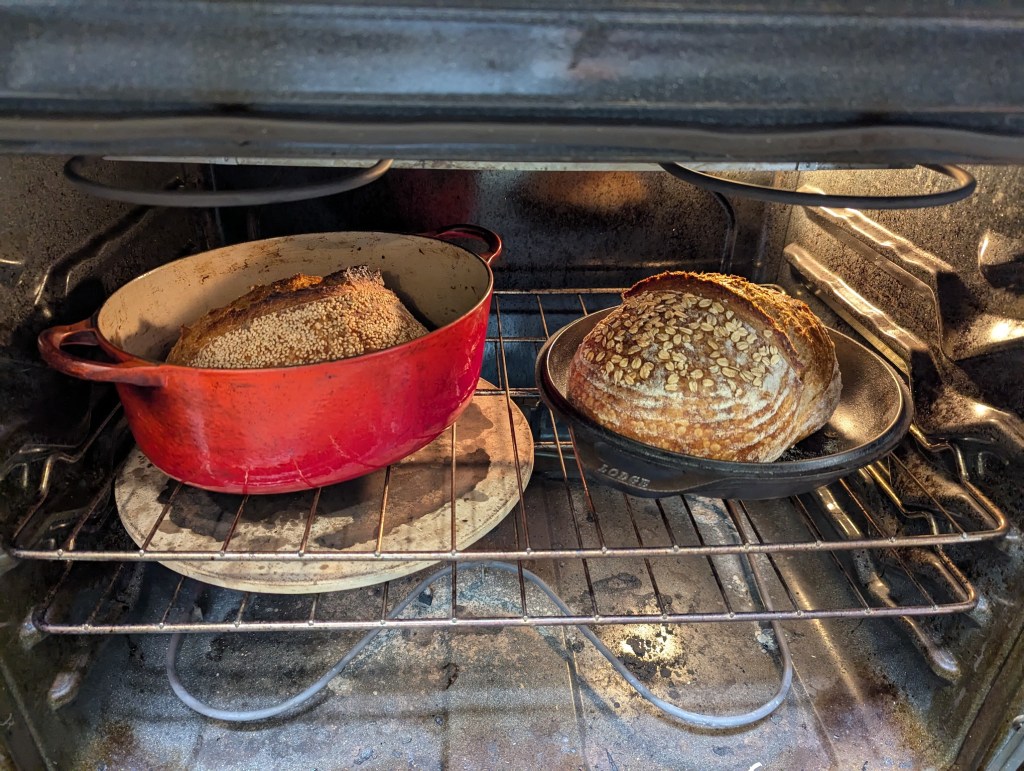
One hour before baking I started preheating the oven, with dutch ovens inside, to 450’F. When it was time to bake, I took the loaves straight from the fridge and placed them in the preheated dutch ovens, gave them a quick score and then put them in the oven.
I baked the loaves at 450’F for 20 minutes covered, then removed the lid of the dutch ovens and baked for an additional 30 minutes.

Result:
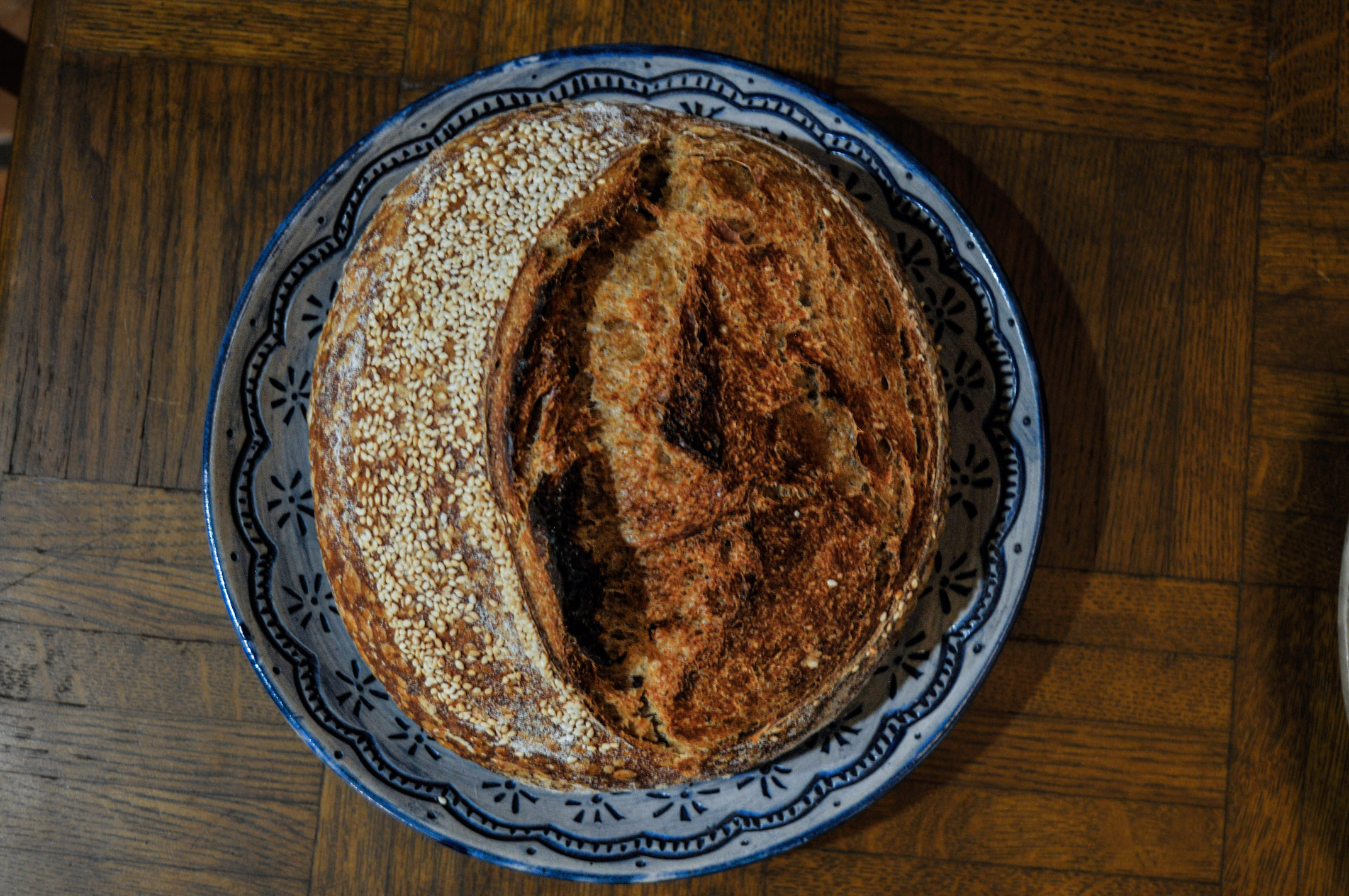
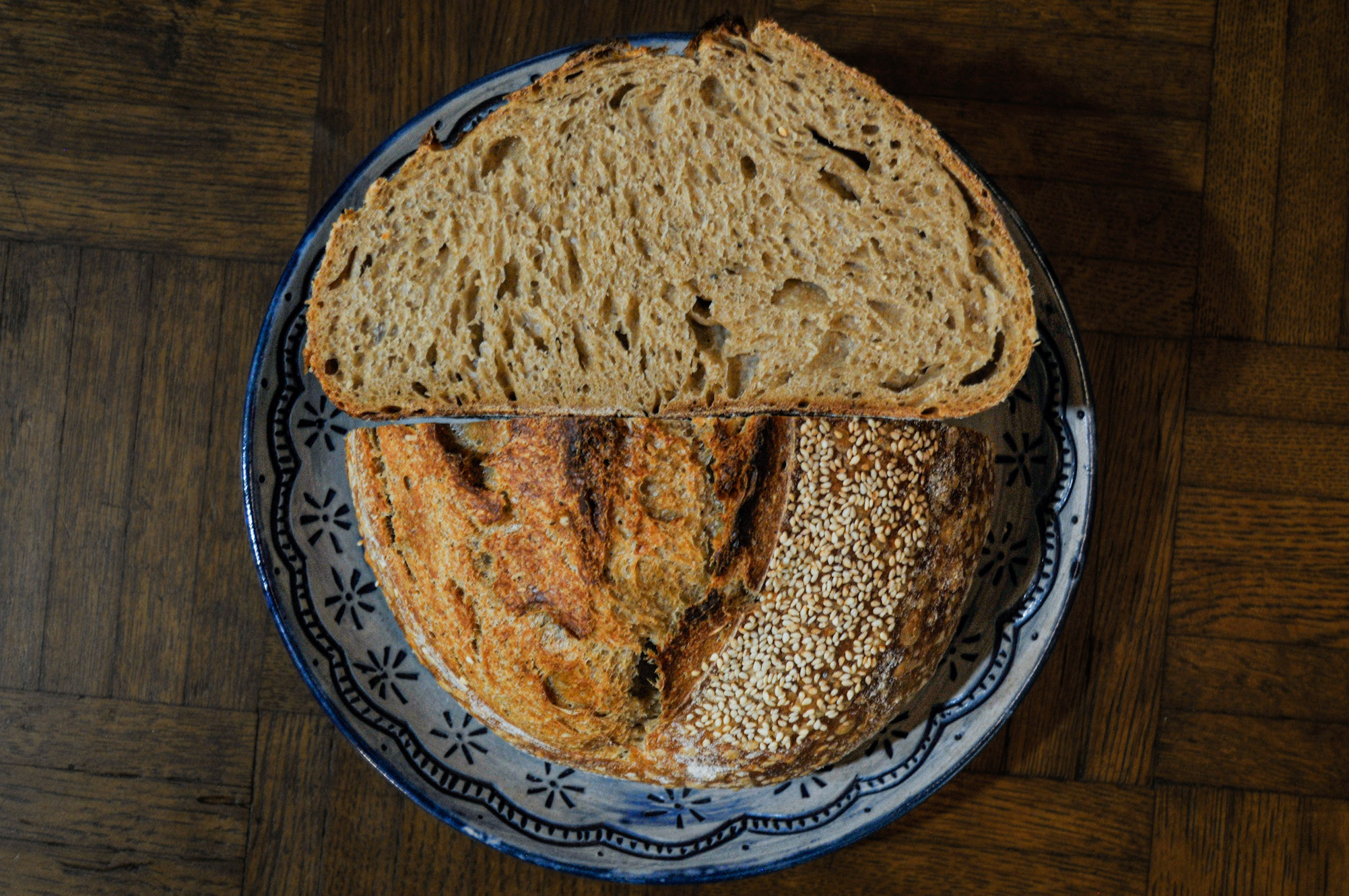
It’s hard to tell from the photo below, but my Dunkel is a little more amber than black. I’d almost call it a brown ale as far as color goes. It was dark enough to provide an excellent tan / brown color to the crumb as well as the crust. I’d imagine the coloration will be even more pronounced if you use a really dark porter or stout.
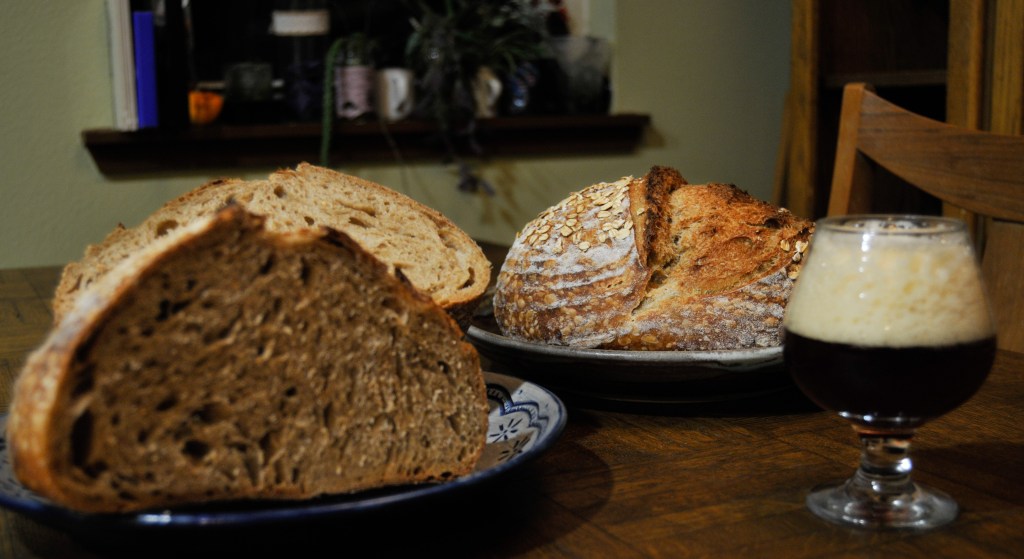
As far as texture goes, everything looks pretty normal to a traditional sourdough bake. The beer didn’t seem to negatively affect the rise, ear or crumb structure at all. The long proof in the fridge really helped bring out the blistering on the loaves too.
I wasn’t sure if the beer would provide that much of a flavor boost, but it seems to have given a really subtle dark roast flavor to the bread. Again, using a really big stout or a beer with a lot more flavor complexity will probably add more flavor in the final bread.
Changes for next time?
Sometimes I prefer leaving adjuncts out of my bread so I can use it for toast, sandwiches, cheesy bread, etc without any conflicting flavors (who wants rosemary with their peanut butter or chocolate with their cheesy bread?). That being said, adding some dried cranberries, walnuts and cocoa nibs or dark chocolate would be a fun test to try.
Aside from playing with some additions in the loaves, I can’t think of anything else I’d change. I’m really happy with this experiment and will be trying it again with different beers.
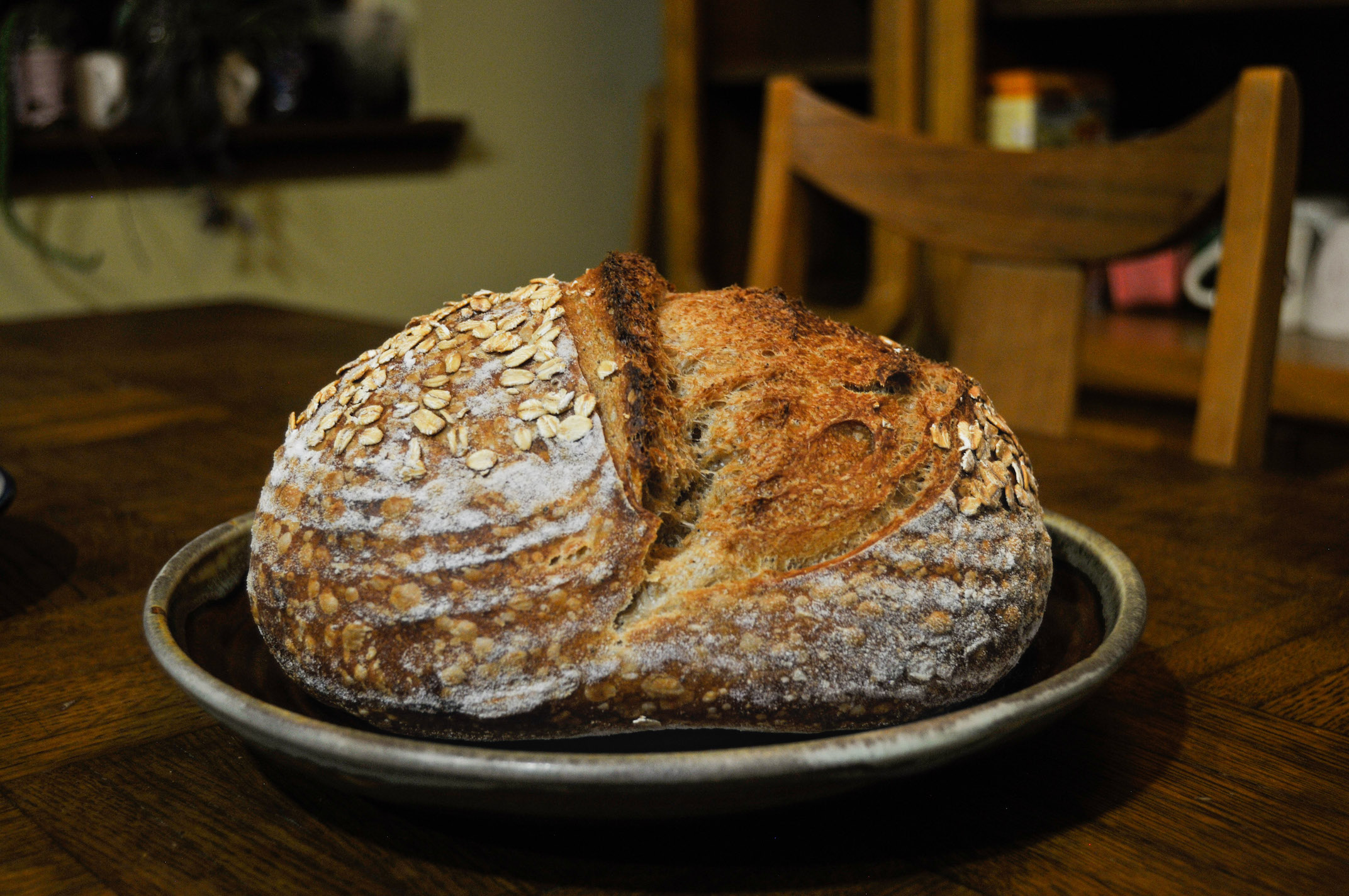
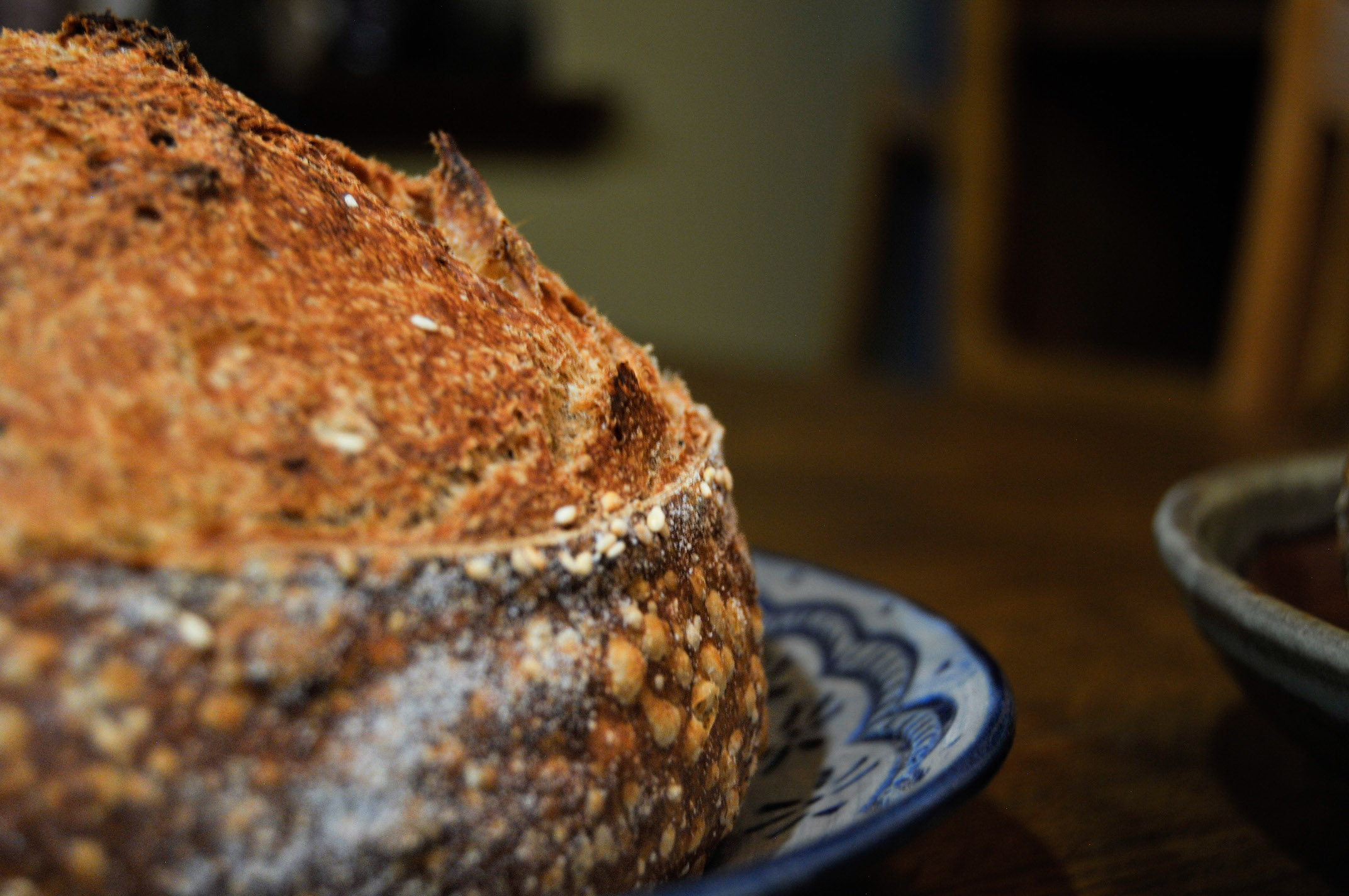
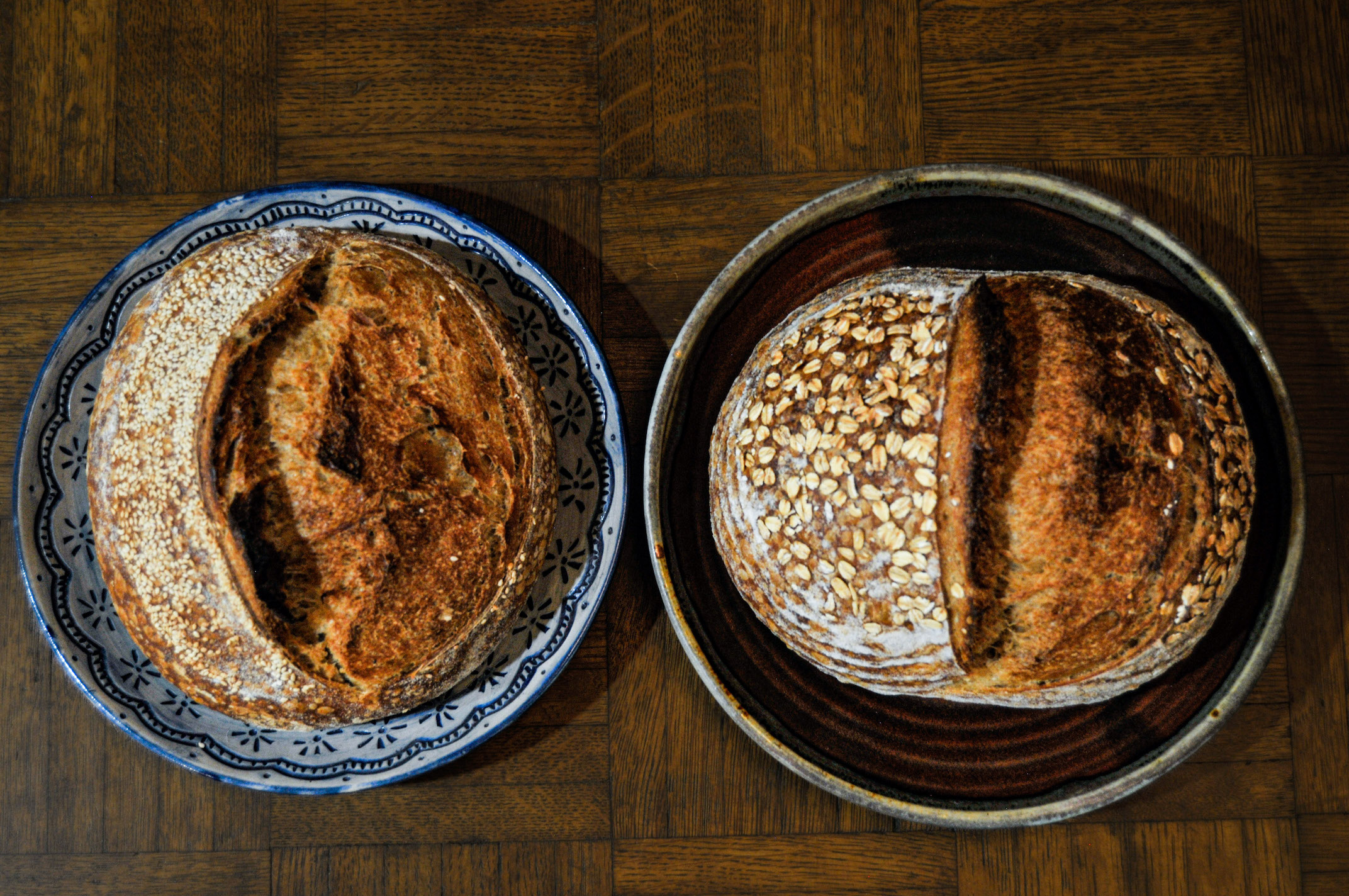
Here are some additional pics of the loaves:



My Baking Notes
- Ambient Temperature @ mixing: 66’F
- Mixed @ 12pm (noon) on November 23rd
- Dough was 79’F at mixing
- 4 stretch and folds in first 1.5 hours
- Started proof @ 8:15pm on November 23rd
- Preheated oven @ 9:20am on November 24th
- Out of fridge and into oven @ 10:20am
 Alegre Bread