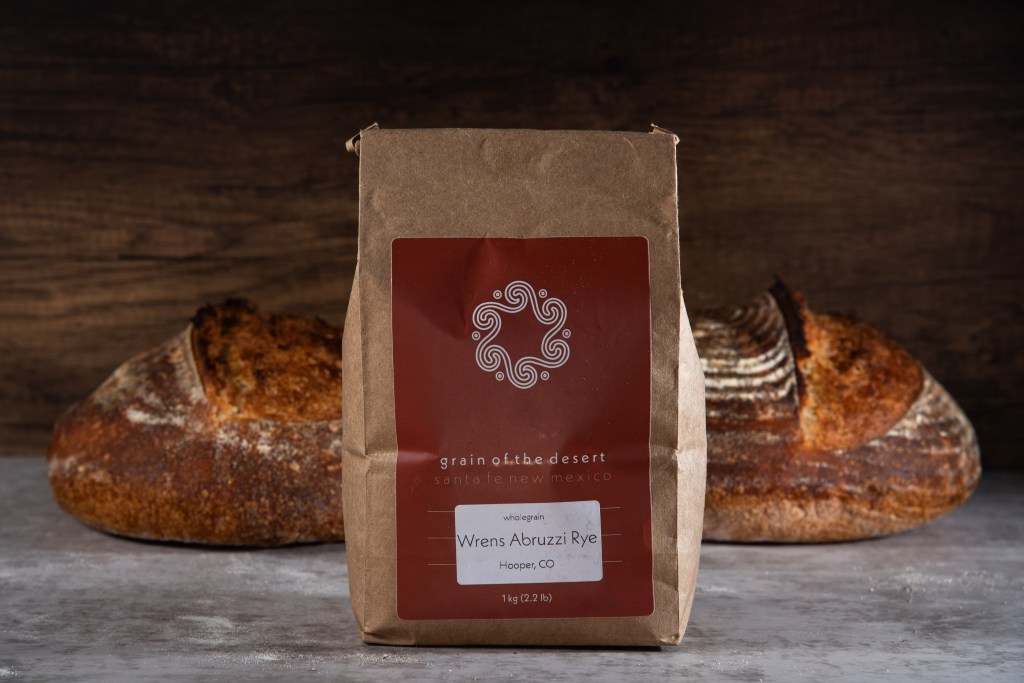
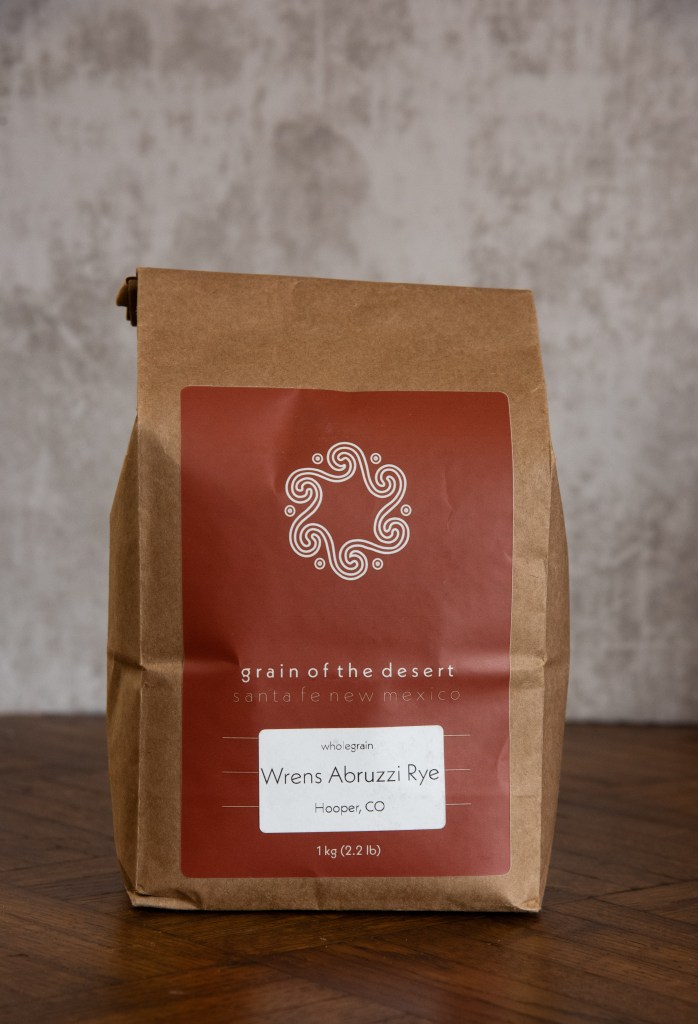
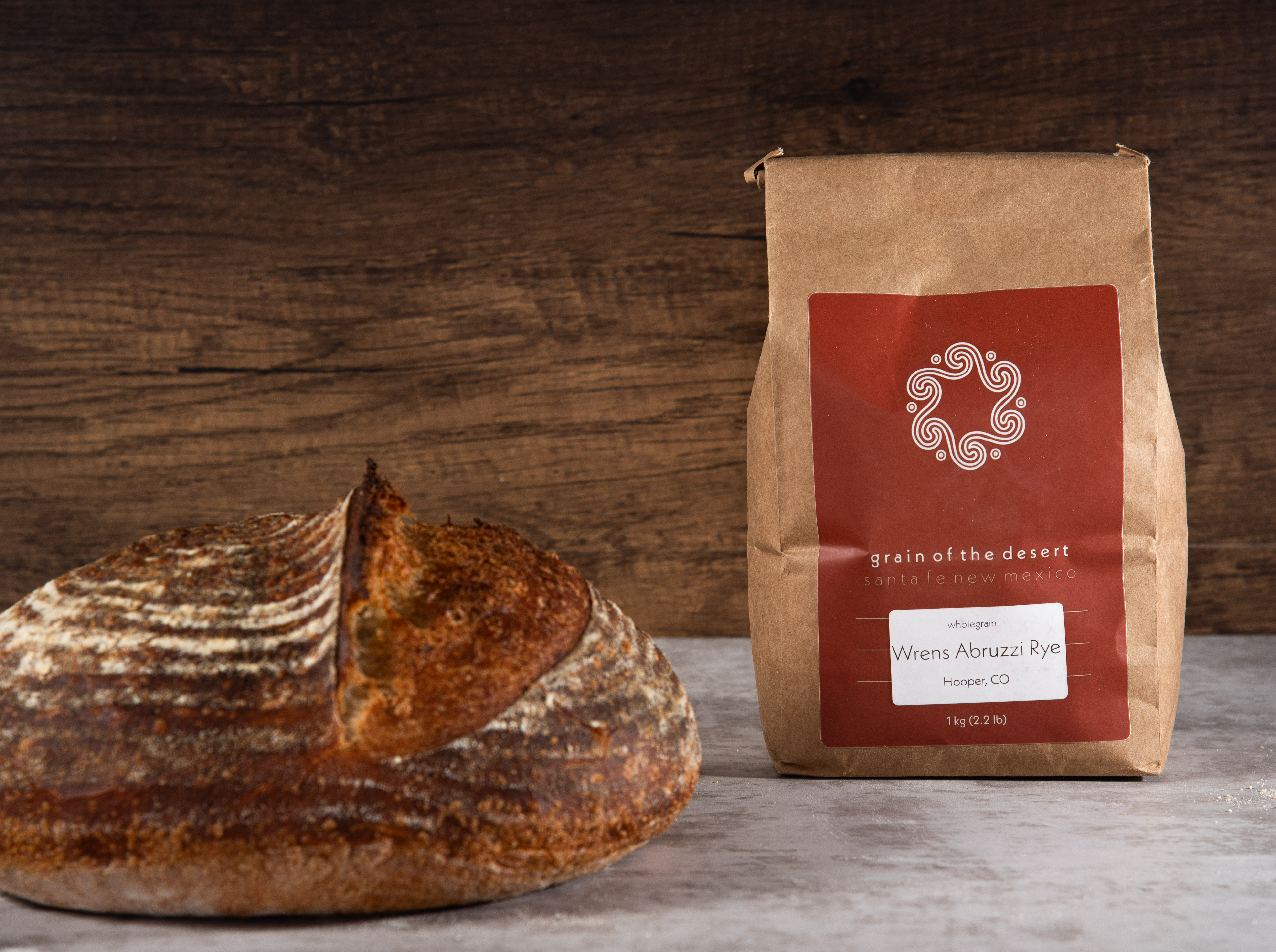
I bought a bag of milled Wrens Abruzzi Rye flour from a local bakery called Grain of the Desert. Wrens Abruzzi Rye is said to be slightly sweeter than other rye flour but is great in savory applications as well. These loaves use 15% Wrens Abruzzi rye, but I might take that percentage up higher next time to really showcase the rye.
Schedule
Using the lazy sourdough method is actually quite simple. The real key to this method is that you can use your unfed starter straight from the fridge without the need to make a levain. There’s also no autolyse which saves about 30 minutes.
Schedule: Here’s a link to the lazy sourdough method.
The exact schedule I used is at the bottom of this post.
Ingredients:
This recipe makes two loaves. Simply divide all the ingredients by two if you only want one loaf.
Dough:
- 850g King Arthur bread flour
- 150g Wrens Abruzzi Rye flour
- 750g filtered water @ 92’F
- 200g unfed starter straight from fridge (100% hydration)
- 22g sea salt
Method:
I started by mixing the flours, and salt. I set that aside and measured out 750g water which I heated up to 92 degrees. To this water, I added my cold starter and mixed it all together. Finally, I poured the water/starter mixture into the dry ingredients and used my hands to mix it all together and perform a few stretch and folds.
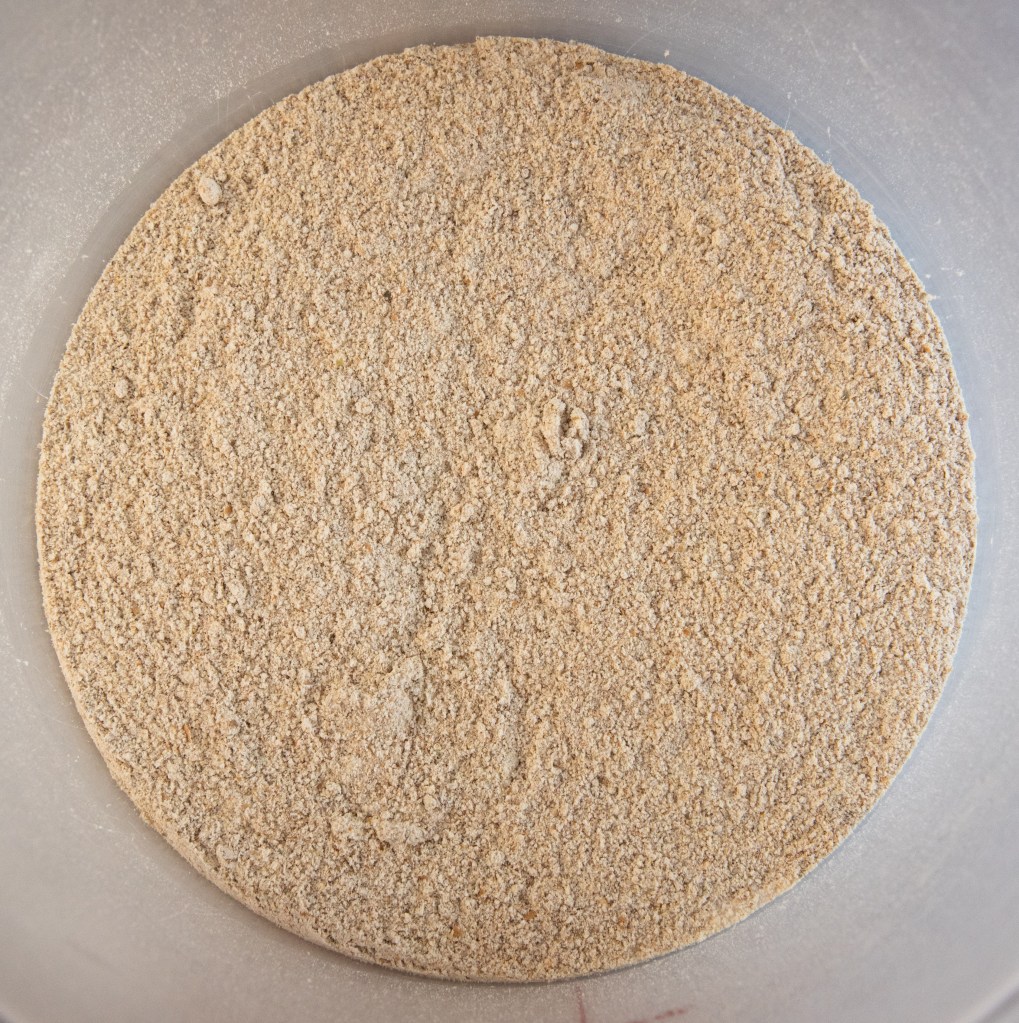
In total, I performed 4 stretch and folds separated by 20 minutes. The dough was a little stickier than what I’m used to when I use whole wheat flour. Usually after the first set of stretch and folds I’m able to fully pick the dough up out of my bowl and flip it over. Using the Wrens Abruzzi rye flour made it a little stickier and it took until the second set of stretch and folds to get to the point where I could pick it up out of the bowl and flip it.
After 7.5 hours, I divided and shaped the loaves and let them sit on the counter for a 10 minute bench rest. Finally, I put them in bannetons that I liberally dusted with rice flour. I put the bannetons in vegetable bags and then placed them in the fridge for a roughly 16 hour cold proof.
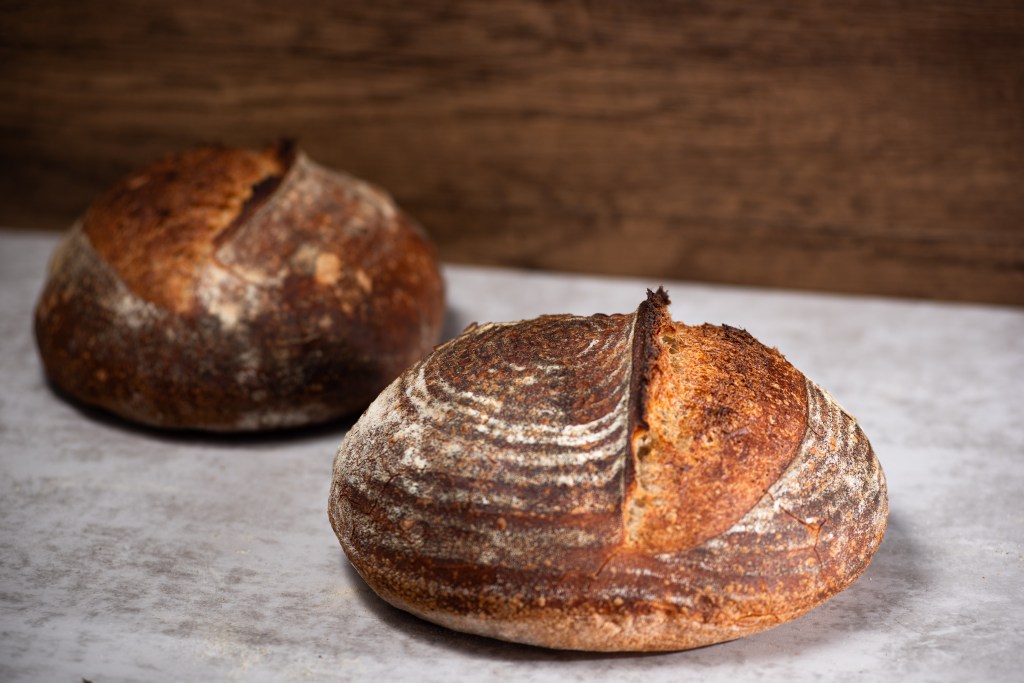
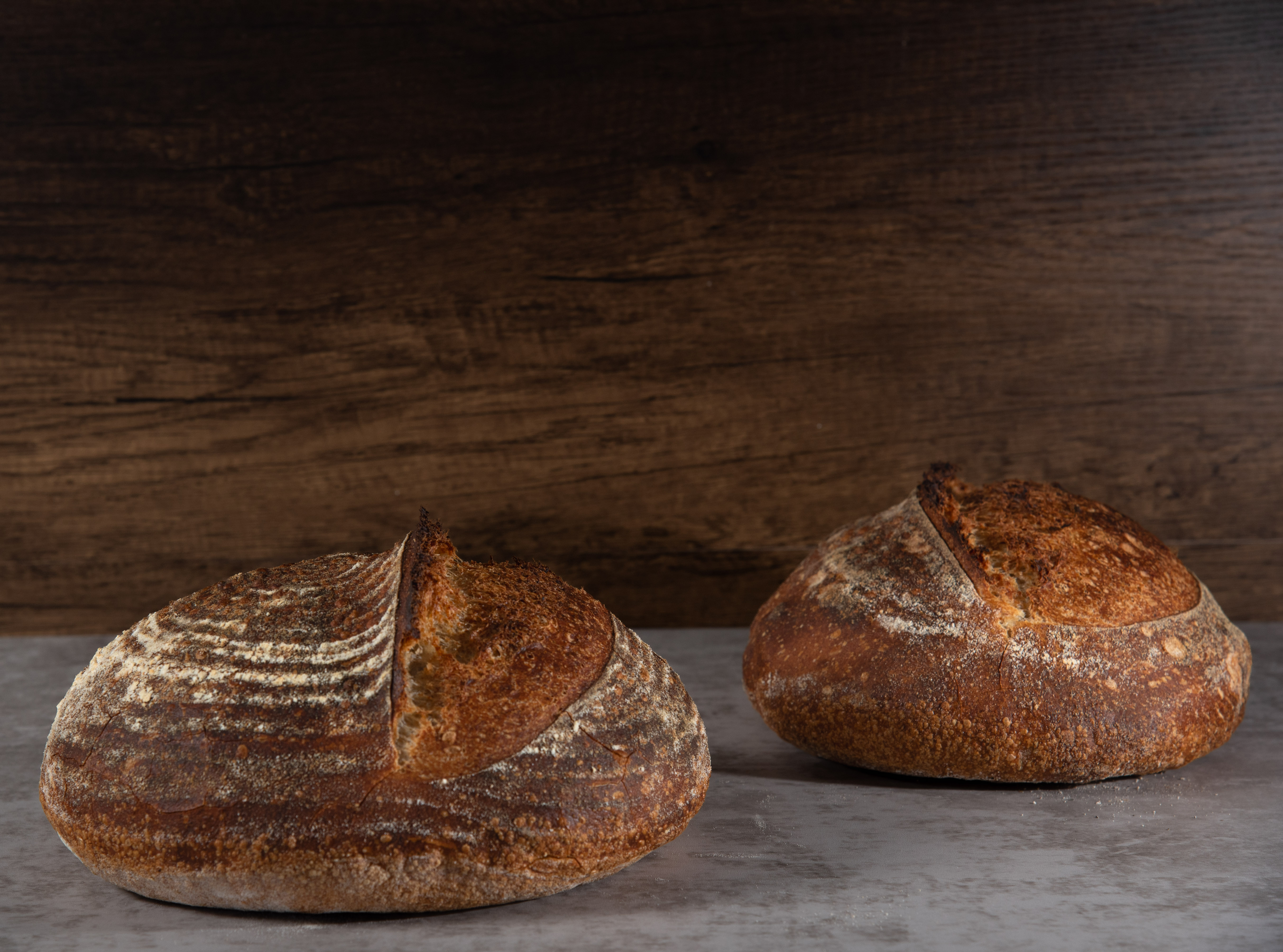
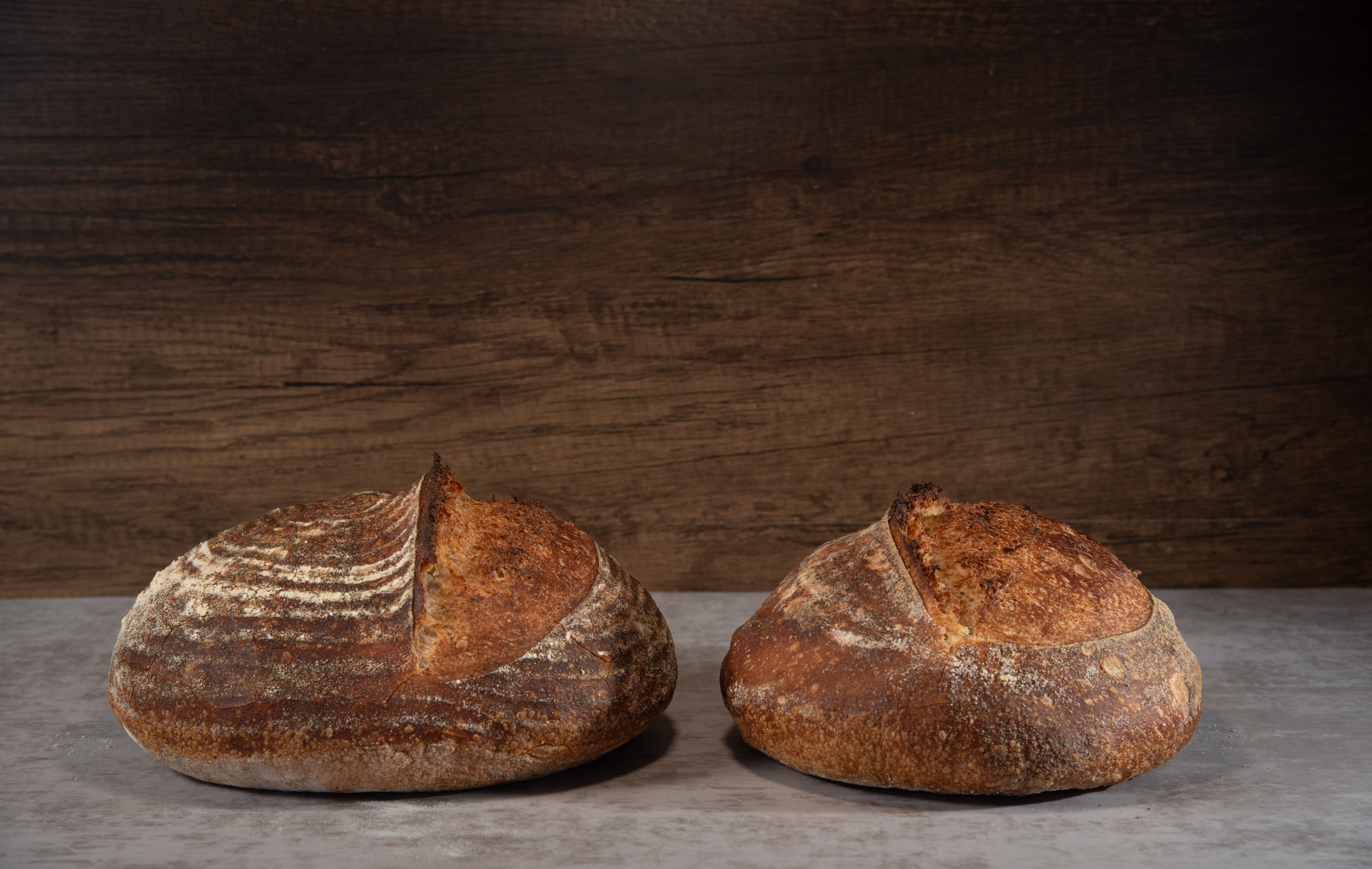
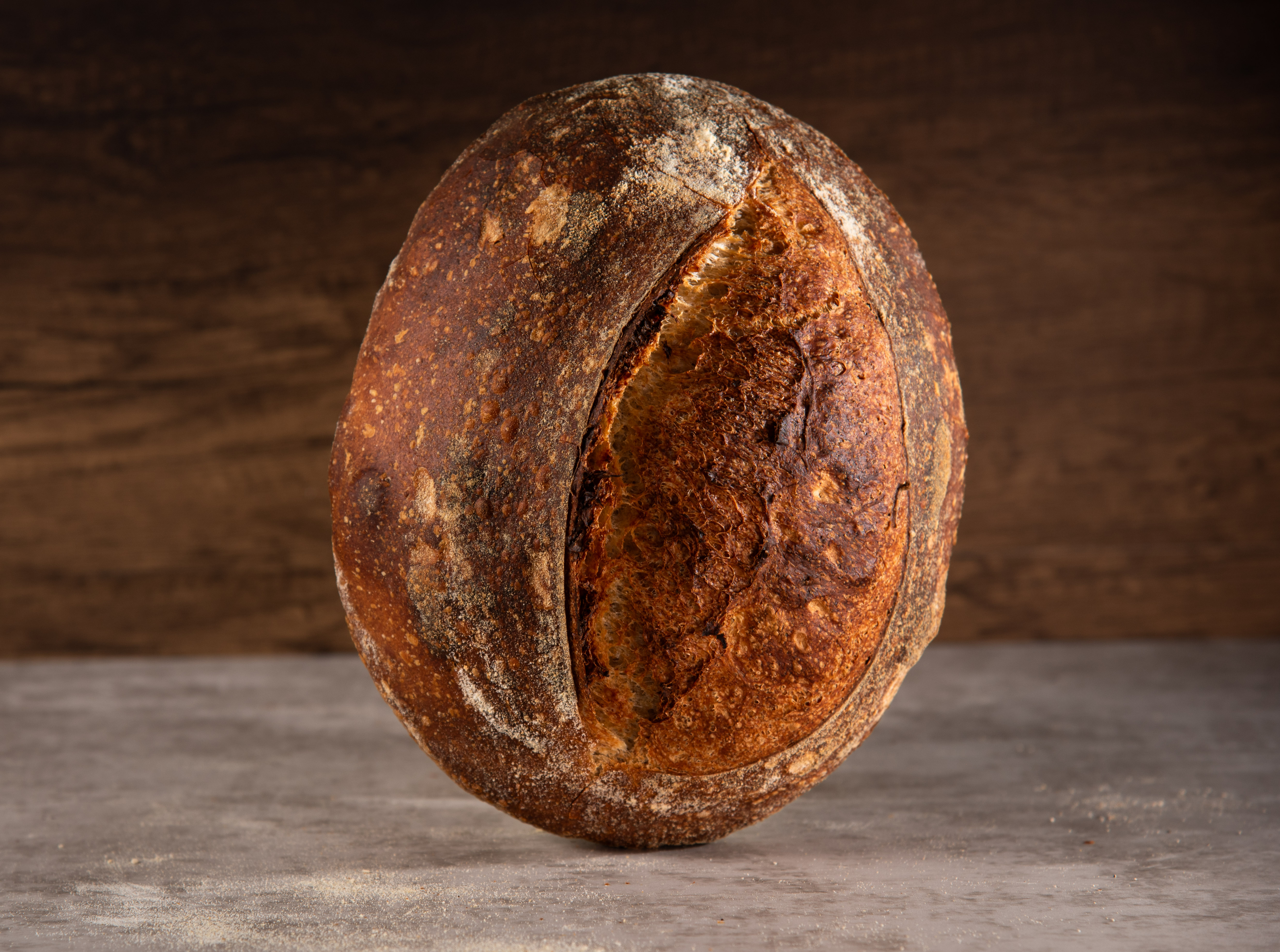
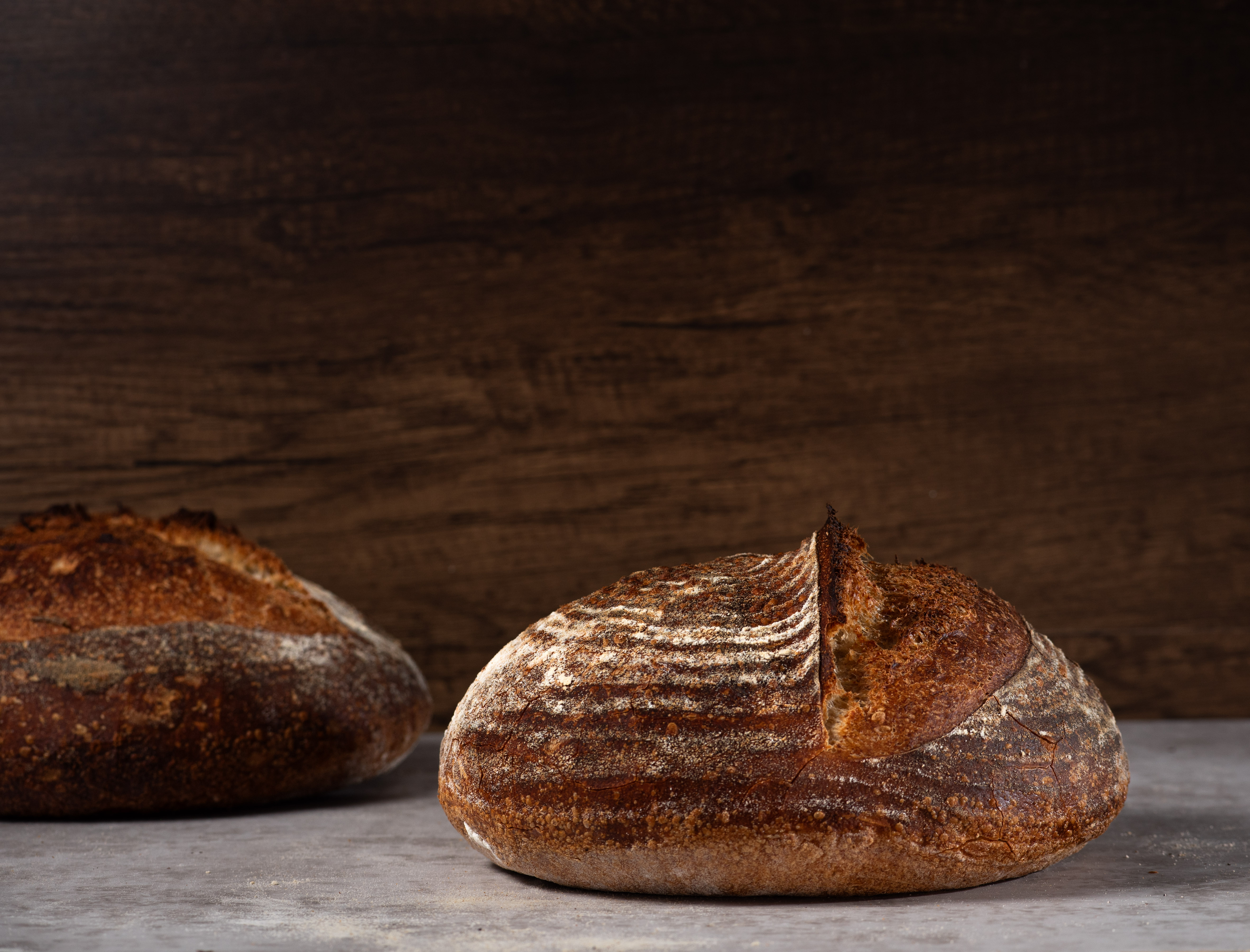
One hour before baking I started preheating the oven, with dutch ovens inside, to 450’F. When it was time to bake, I took the loaves straight from the fridge and placed them in the preheated dutch ovens, gave them a quick score and then put them in the oven. For this scoring, I tried going deeper and more at an angle in an attempt to get a better ear. I think this ended up working a lot better, as I got a more defined ear on both loaves this time.
I baked the loaves at 450’F for 20 minutes covered, then removed the lid of the dutch ovens and baked for an additional 30 minutes.
Result:
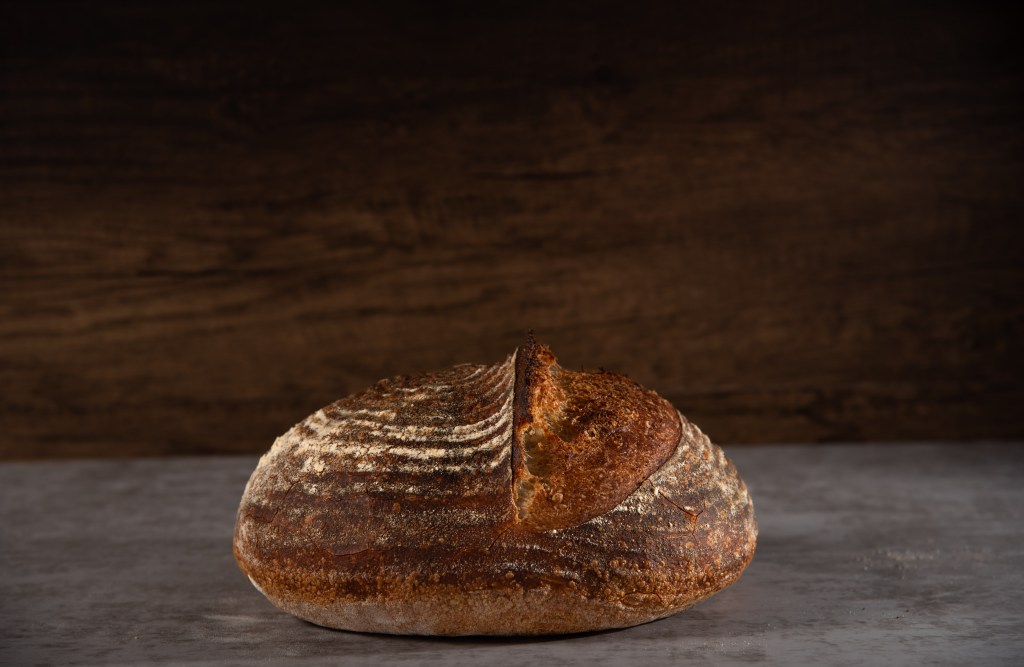
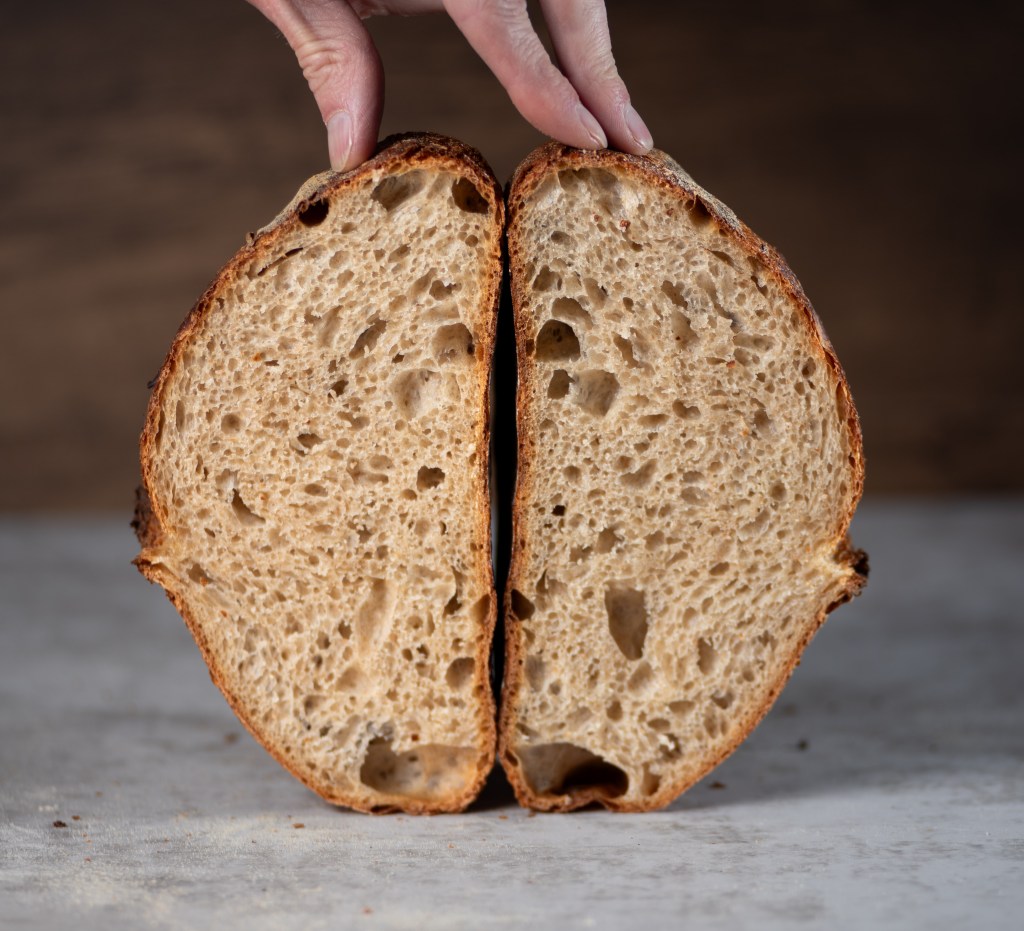
I’m really happy with how these loaves turned out. The crumb structure is excellent and the flavor is really nice. The rye gives the crumb a little bit more complexity as far as color and texture goes. There’s some great blistering on the crust and the rings from the banneton transferred over well in the round loaf.

I used slices of this bread to make some massive pressed sandwiches for an endurance bike race I competed in last weekend. The bread held up extremely well to being filled with all kinds of ingredients including ham, roast beef, jalapenos, pickled banana peppers, spinach, mustard and cheese.
Massive sandwiches aside, this bread also makes excellent toast where it showcases the bread itself a little more.
Changes for next time?
Like I mentioned in my header paragraph, I’ll probably bump this up to 20% Wrens Abruzzi Rye next time to really let the flavor of the rye come through. At 15%, it’s not as apparent as I’d like it to be flavor wise, but it still makes an excellent addition to the bread without affecting the crust or crumb structure at all.
My Baking Notes
- Ambient Temperature @ mixing: 64’F
- Mixed @ 12:30pm on January 13th
- Dough was 78’F at mixing
- 4 stretch and folds in first 1.5 hours
- Started proof @ 8:20pm on January 15th
- Preheated oven @ 10:40am on January 16th
- Out of fridge and into oven @ 11:40am on January 16th
 Alegre Bread